Modern bridge infrastructure projects demand more than conventional design approaches. Increasing project complexity, difficult geological conditions, seismic considerations, and long-span foundation systems require engineers to adopt advanced digital engineering workflows capable of delivering accurate and reliable geotechnical analysis. Technologies such as PLAXIS and Leapfrog are playing a major role in transforming bridge foundation engineering through connected geological modelling and advanced numerical simulation.
At Forefront Engineering Pvt. Ltd., we support infrastructure professionals with advanced digital engineering technologies from Bentley Systems helping organizations adopt intelligent geotechnical workflows that improve engineering accuracy, reduce project risks, and optimize infrastructure delivery.
Bridge foundations are subjected to highly complex interactions between soil, structures, groundwater, seismic loading, and staged construction activities. Traditional analytical methods often simplify these conditions, making it difficult to accurately predict actual ground and foundation behavior in large infrastructure projects. Advanced geotechnical analysis software such as PLAXIS enables engineers to simulate realistic soil behavior and soil-structure interaction using finite element analysis.
PLAXIS allows infrastructure engineers to evaluate pile foundation performance, settlement behavior, retaining systems, excavation impacts, groundwater effects, seismic loading, and long-term deformation with significantly greater accuracy. The software is widely used for transportation infrastructure, bridge engineering, tunnels, embankments, deep excavations, and large-scale civil engineering projects where geotechnical performance is critical.
When combined with Leapfrog, the workflow becomes even more powerful. Leapfrog enables engineers and geologists to create highly accurate 3D geological models using borehole data, geological mapping, geophysical information, and subsurface investigation datasets. These geological models can then be integrated into PLAXIS for advanced numerical analysis and design optimization.
A strong example of this integrated workflow can be seen in the Salvador–Itaparica Bridge Project in Brazil developed by Sener Mobility as shown in Figure 1 below. The project involved a large transportation corridor and major cable-stayed bridge structures requiring highly detailed geotechnical assessment and deep foundation analysis. Due to the complexity of the geological conditions, the project team adopted PLAXIS together with Leapfrog Works to establish a connected digital geotechnical engineering workflow.
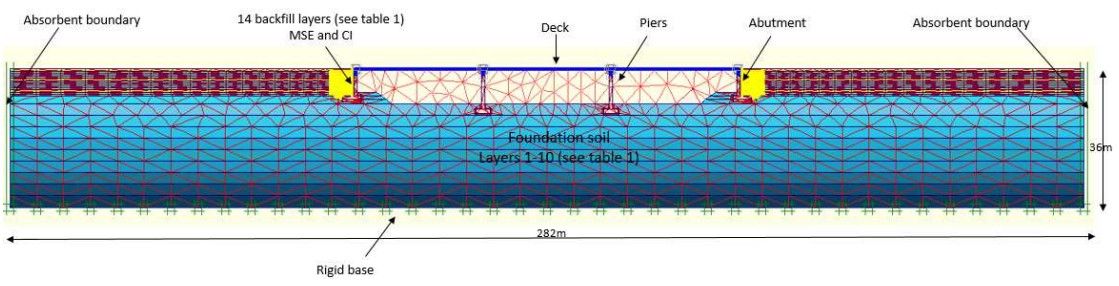
Figure 1: Salvador–Itaparica Bridge Project in Brazil developed by Sener Mobility.
Image courtesy: Image adapted from publicly available materials published by Bentley Systems Blog.
According to Bentley Systems, the implementation of integrated 3D geological and geotechnical modelling helped reduce geological interpretation time by approximately 20–30% while improving engineering efficiency throughout the design process. The workflow also optimized pile foundation design by around 10%, reducing unnecessary conservatism while maintaining engineering safety and reliability. Additionally, the digital workflow minimized design modifications during construction and significantly reduced engineering hours and material costs.
The Salvador–Itaparica Bridge Project demonstrates how digital geotechnical engineering is reshaping modern bridge infrastructure development. Rather than relying on disconnected workflows between geological interpretation and structural analysis, connected modelling environments allow engineers to evaluate subsurface risks and foundation behavior more efficiently before construction begins.
This approach improves engineering collaboration, enhances decision-making, and minimizes costly construction-stage uncertainties. Infrastructure teams can better analyze soil-pile interaction, foundation settlement, construction sequencing, excavation effects, and seismic response under realistic site conditions using advanced finite element modelling.
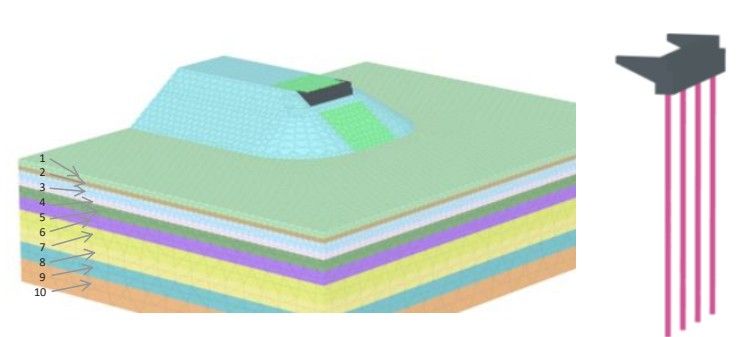
Figure 2: 3D geotechnical finite element model illustrating layered soil strata and deep pile foundation interaction for bridge foundation analysis using advanced numerical modelling workflows in PLAXIS.
Image courtesy: Image adapted from publicly available materials published by Bentley Systems Blog.
PLAXIS is increasingly used in bridge engineering applications involving integral and semi-integral bridge systems, seismic response analysis, railway bridge construction sequencing, and pile foundation performance in soft soil conditions. Modern infrastructure projects require engineers to understand how soil and structural systems behave together under both static and dynamic loading conditions. Numerical modelling provides the detailed engineering insight necessary for optimizing design performance and reducing long-term infrastructure risks.
The increasing adoption of connected digital engineering workflows is also closely linked with BIM, digital twins, and intelligent infrastructure delivery. Infrastructure owners, consultants, and contractors are moving toward integrated project environments where geological data, geotechnical analysis, structural design, and construction planning work together within a unified digital ecosystem.
At Forefront Engineering Pvt. Ltd., we help organizations implement advanced digital engineering technologies through software solutions, technical consulting, professional training, and engineering support services. Our expertise includes PLAXIS, Leapfrog, OpenGround, OpenBridge, BIM workflows, and other infrastructure engineering solutions from Bentley Systems and Seequent.
By adopting connected geotechnical workflows, engineering teams can improve project coordination, optimize material usage, reduce design uncertainty, enhance construction planning, and improve long-term infrastructure performance. Advanced numerical modelling technologies are becoming essential for delivering safer, smarter, and more resilient bridge infrastructure projects.
As infrastructure engineering continues evolving toward digital project delivery, technologies such as PLAXIS and Leapfrog are helping engineers transform the future of bridge foundation engineering through intelligent simulation, connected geological modelling, and advanced geotechnical analysis workflows.
Browse our Software store:
Click Here to explore our new products and place your order today.
Contact Us
To learn more about advanced geotechnical engineering solutions, bridge foundation analysis workflows, and digital infrastructure technologies from Bentley Systems and Seequent, connect with Forefront Engineering Pvt. Ltd..
Phone: +977-9741803161 | +977-9741803162
Email: hello@forefronteng.com
Our team is ready to support you with trusted engineering software and local expertise, helping you deliver safer, smarter, and more reliable infrastructure projects through advanced digital engineering workflows.
Blog References